Showing posts with label cognitive behavioural therapy. Show all posts

Wednesday, May 17, 2017

Mental health service budgets 'cut by 8%' But we can still help you by offering affordable counselling


Mental health service budgets 'cut by 8%'

But we are still going strong regardless & offering affordable counselling


'Therapy for Life' has survived all along without funding or any aid from the government, and still able to offer affordable counselling for the public from as little as £15 per session on our scheme.


How do we do it? Our successful results bring back client after client through positive word-of-mouth. We are able to see clients within a week instead of long waiting lists, and our therapy is tailored to each client. We don't just use a single theory, we are integrated therapists and apply several theories to get the client to achieve their goals.


Successful companies like us are built on good feedback and results. That's how we survive inspite of the cuts that the NHS IAPT and MIND services suffer.
We are here and ready to help, why not come along and meet us. You'll be greeted with a warm friendly smile and offered something to suit your needs.


Client Testimonials:
"I have struggled with depression at various points in my life and have had anxiety as long as I can remember. I thought these were things I had to learn to live with.When it got really bad, I felt like there was nobody to help and no escape from my fears. It was a very frightening time. Luckily, I found Sam at Therapy for Life. Using CBT and other techniques, we talked through my worries and worked through my issues each week. She laid out a plan for me to do after each session and I felt empowered. My confidence grew and she gave lots of support and kindness. I was quickly back on my feet and I have got a brand new outlook on my life. It was a compelling and rewarding experience. I feel more in tune with myself and my confidence is here to stay. I am very glad I picked up the phone to her. I would highly recommend Therapy to Life and thank Sam for helping me feel free and happy."
Lucy from Southend-on-Sea
"On initially meeting Sam, you immediately realise why she is a counsellor. Being able to talk to someone knowing that they are truly listening is such an empowering experience. Sam shows such empathy and provides the perfect environment to be able to talk openly and honestly without the fear of being judged. Most of us at some time, for whatever reason, struggle to deal with certain issues and don’t quite know how to move forward. By seeing Sam and talking it through we worked together on coming up with a more positive way to deal with things. We owe it to ourselves to lead the happiest life possible. I would most definitely recommend Sam to anybody. You could not meet a kinder, more caring, genuine, trustworthy person. A truly positive experience. Thank you."
Keeley Smith from Essex


"Many thanks for the care, warmth and professionalism you have shown me over the last few months Sam. As I have said to you before, I am amazed at how much I have got out of the counselling sessions. I have a greater understanding of myself, feel more relaxed and able to manage life’s challenges better, which previously caused me a lot of anxiety - can’t thank you enough!"

Nicola Huggan from Essex


"I can honesty say therapy for life changed my life in every way As cliche as it may sound I feel like I've grown as a woman and person in mind and spirit. Sam was so welcoming and warm I felt comfortable and safe. Thank you is not enough I will be forever and eternally grateful."
Laurelle from Essex


"We found our counselling sessions really helpful and supportive. Sam was really lovely and made us feel at ease. Just having someone listen to our situation really helped us in our relationship. We would definitely recommend Sam and therapy for life for anyone who may have problems or struggling with life in general"
Claire and John from 
Southend-on-Sea

Source: BBC News


Wednesday, August 10, 2016

Stuck on a Waiting List? Can’t afford Counselling? Really need help?... Sessions from £15 on a new scheme


At Therapy for Life, we can now offer counselling that’s affordable for everyone in Southend-on-Sea.


If you don’t mind having treatment from recently qualified counsellors, or counsellors undergoing the last parts of training... we have found your solution!

Our counsellors are supervised and monitored and are up to date with all the latest techniques and skills in psychology.

For £15-£20 per hour, you will benefit from their expertise in a modern comfortable room. We are a friendly group of counsellors and you will be very welcomed.

Many people have negative preconceptions of therapy, if you’ve never been sure whether it would suit you, or you had a bad experience in therapy... This is your chance to give it a try with us for very little expenditure. You never know, you may really benefit...

We only have space for a few clients under this new scheme, so do contact us and book in as soon as possible... We will start running these sessions from September 2016.

You will be given an initial assessment on the phone with Sam, then your counsellor will communicate with you to arrange a suitable date and time.

Terms & Conditions:

  • Cash is to be paid upfront at each session.
  • Your attendance is expected unless you ring to cancel (early that morning at the latest if possible in emergencies).
  • There will be a minimum charge of £12 if you fail 2 consecutive sessions or more without ringing to cancel (please cancel sessions ideally at least 24 hours before to avoid charges). These failure charges are put in place because room rent still needs to be paid whether the client turns up or not.
  • If you fail to attend 2 or more sessions successively without ringing to cancel, or your attendance is very poor, your place could be given to someone else
  • You are entitled to have an initial 6 sessions then a review to see if more are needed. You may have up to 12 sessions at this reduced fee, then the session fee goes up to the normal concessional rate at Therapy for Life if long term therapy is required.
  • To qualify, you must prove that you are on Income Support, Benefits, Pension Credits or Job Seekers Allowance at your first session. If you are on a low wage and can prove it but don't receive benefits, you can still be entitled to the help, every case is considered.
  • Your financial situation will determine your fee, our negotiation on fee relies on clients being honest about what they can truly afford, at the end of the day we'd rather you get the help you need, but understandably bills must still be paid at Therapy for Life. 

Contact Sam: sam.c@therapyforlife.co.uk/ 07546 917252

Thursday, March 17, 2016

Therapy for Life's new addition to Play Therapy for children... Why is Play Therapy good?


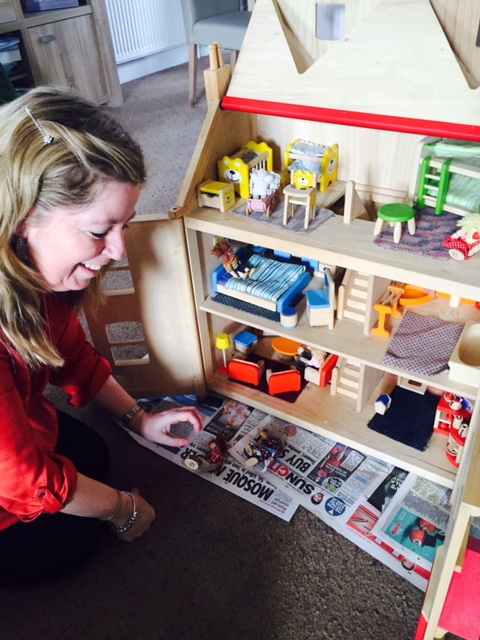
'Therapy for Life' have a gorgeous toy playhouse for the therapy room. In addition to our new Kinetic Sand Tray, toys, books, colouring pens and pencils.

Why is a model playhouse or a sand tray good for therapy?

Children don’t have the same cognitive ability as an adult to say what’s bothering them. The problem could be a behavioural issue, psychological issue, or maybe even medical. No matter what the problem is, they need a way to discuss it. The uses of play are very important, children can work on issues that are distressing to them, can play out issues of what they think the future will be, and can talk about trauma. If it’s too hard to put into words, they can work on it with play.

For example, many children under 12 years old can’t express what they’re feeling or really even be able to ask questions about what they’re feeling. They just know something is different and upsetting. Play therapy might be a way for them to express what they find troubling without using any verbal language. You can’t stick the child on a couch and ask them to start telling you what’s on their mind. Instead play therapy builds upon their normal communication level using play.

The range spans from a very non-directive child-centered play to a mixed approach and even a very direct approach such as cognitive behavioural play therapy. As children get older and become more verbal and able to think abstractly, they may be more able to use techniques common in cognitive behavioural therapy.

"Of course the most important aspect is enabling the child to feel safe, once they feel safe and relaxed, the playtime flows and the child can begin to tell their perspective on life through drawings and toy figures, recreating what they have experienced and what they predict might happen." Samantha Crook

The idea of being in control of the play can help give a child confidence. Since the child may feel out of control with the events playing out in the rest of his or her life, that sense of control during playtime is important.

It's even good for teaching parents how to use skills in play to help their children to open up.
Because of the way our society is today, a lot of parents are in the habit of turning play into an educational or learning experience, I see parents correcting their kids as they play, such as making them say ‘please’ or making them count items.

There’s this pressure on parents to use every opportunity to be a learning experience instead of just sitting and enjoying that playtime with the child. It can be hard to break that habit, but parents see how much kids value uninterrupted playtime at play therapy and we hope they’ll bring that experience home. For children to come to a place where they get to sit down and not only play but get 50 minutes of an adult’s complete attention is a rare thing.

If you think you're child is feeling lost and alone, or their behaviour is difficult or very quiet, please give us a call. We understand that all you want is your child to be happy, sometimes the help has to come from outside to bring the family together.


Friday, March 11, 2016

Incentive to encourage people's kindness to help friends with mental illness


Let’s face it... it’s uncomfortable for people to talk about Mental Health Issues. There is still a fear and stigma ingrained when discussing things like depression, anxiety, stress, grief, self-harm and suicidal thoughts. 


One of the ways we have started to reach out is through our clients. Many of us know someone who might be in need, finding life difficult to cope with or always seem stressed and find daily catastrophes ruining their lives.

"The pressures of life and the pressures we put on ourselves can be overwhelming, after all the biggest wall we will ever climb is the one we create in our minds".

At 'Therapy for Life', our clients at the end of therapy not only go away feeling good and have acquired new skills to cope with life, but their awareness has increased. Once their own problems become manageable, often their new heightened self-awareness abilities allow them to begin to empathise with others in difficulty.


We offer our clients a ‘Therapy for Life’ silicone wristband to wear with pride, to remember their own achievements during therapy, but also for when they recognise a fellow human being in need.
The idea is that they give their wristband to their suffering friend/colleague/family member who hears how 'Therapy for Life' can help. 


The suffering friend then contacts us and gains the help and support they need to head towards the life that they want.


As a reward, Therapy for Life sends a money gift of £30 to the referee for their kindness to another. It’s our way of saying ‘Well done, feel proud that you have helped someone’. It also encourages communication and connection within the community and begins to lift the stigmas around mental health issues replacing the fear with courage.
Terms and Conditions Apply*


If you or someone you know is distressed and not coping with life, contact Sam 07546 917252 or Jackie 07492 360357 at Therapy for Life.


At Therapy for Life, we are working towards encouraging communication and connection, relaying the importance of members of the public noticing a fellow human being in need, and then being brave enough to offer them help. This can go such a long way to improving lives and making a difference. Our aim is to support healthy lifestyles, aid people in getting back to work and to improve interaction within the community through working on client's setbacks in mental illness.

*Once the referred client has attended 3 sessions, the referee is then entitled to the reward and is contacted regarding the transfer.Client must have wristband and referees details.
Does not apply to concessions - see website

Wednesday, March 9, 2016

10 Simple Ways to Keep a Happy, Healthy Mind


  1. Eat Healthily – We all know that what we eat has a big impact on our physical wellbeing, but it also affects your mental happiness. As the old saying goes; a healthy body makes a healthy mind, so think about your diet and what foods you maybe eat too much of. While it’s easy to forgo healthy foods for those that are convenient there are lots of quick and easy meals that are much better for you. Eating three meals a day will keep your energy levels up and keep you feeling good all day long. As well as eating healthy foods, drinking lots of water will keep you hydrated and boost your metabolism; making you feel and look better.
  2. Watch what you Drink – While a lot of people drink alcohol and caffeine to change their mood, their effect is only temporary. When the feelings of energy or excitement fade you will often feel a lot worse than before you drank, which has a big effect on your mental wellbeing. Most people only drink alcohol or caffeine in moderation which can often be good for you. However, some people carry on drinking to delay the onset of these negative feelings, or to escape underlying feelings of nervousness or depression. This is very dangerous and can cause long-term health problems or cover up existing conditions. Try to drink no more than four units of alcohol a day if you are male and three if you are female, and try not to drink caffeinated after seven o’clock at night.
  3. Take some Exercise – Doing a little exercise every day has many different benefits; both mental and physical. When you exercise your body releases endorphins which can greatly improve your mood. You don’t have to spend a lot of money and join a gym to get some exercise; walking or cycling to your destination instead of driving, cleaning the house while listening to music and gardening are all easy ways to get the blood pumping. After a while you’ll start to find doing tasks easier as well looking better, which in turn will also make you feel better about yourself.
  4. Talking to Others – In today’s world it has never been easier to keep in touch with friends and family. Feeling connected with other people is an important part of what makes us human and neglecting this part of life can have detrimental effects on your mental health. Many mental health problems have their roots in trouble with communication and can be helped or even prevented by keeping in touch with others and maintaining strong relationships. If you are having difficulties then some of the best help can be given by friends or family, so talk to them about how you feel as well as listening to their thoughts and emotions.
  5. Getting a Change of Scenery – Sometimes we get stuck in a rut, it happens to all of us! Taking a holiday is a great way to relax, improve your mood and see more of the world. However, not all of us are lucky enough to jet off into the sun whenever we feel like it. But there are much simpler (and less expensive) ways of taking a break from our day-to-day routine, which can do just as much to improve your mental health. Taking a different route to work or just moving the furniture around will help your mind in being able to experience new things and cope with different situations.
  6. Get a Hobby – So much of our lives are taken up by the pressures of work these days that we can sometimes forget about what we enjoy. Maybe you love to paint, play a musical instrument or have always wanted to build the best railway set in the country. Taking some time out to dedicate just to yourself will help you cope with stress, focus your mind and allow you to express yourself. If you are feeling blue, conveying your thoughts in a painting, a song or in a poem will help you understand how you feel and make you feel much better.
  7. Accepting that You are Unique – Many people are unhappy or self-conscious about their appearance, the way they speak or their background; comparing themselves unfairly to others they see in magazines or on television. These kinds of feeling can lead to an entrenched sense of worthlessness or even bring about conditions such as depression or an eating disorder. By talking to others and expressing your feelings you will be able to get a better understanding of both your weaknesses and strengths. If you find it helps, take five minutes every day to list the qualities that make you unique, thinking of one positive and then one negative, and try to accept that you are you; which is the best person you can be.
  8. Care for Others – It’s only natural to be concerned for other’s welfare, whoever they are. Part of maintaining healthy relationships is returning concern for those who care for you. This could be as simple as signing a ‘get well’ card at work or calling an elderly relative to ask how they are. Getting a pet makes you exercise these emotions constantly as you are the person they rely on for food, shelter and love. Really caring for others can help greatly improve your mental health and allow you to explore feelings you may have grown out of touch with. You may even find you enjoy it so much that you want to volunteer to help others in the community who are less fortunate than yourself, but this is only an extreme example of caring. Allowing yourself to have feelings for others helps you understand why other people care for you and why you should care for yourself.
  9. Exercise your mind – Just like the rest of your body your brain needs exercise too in order to stay healthy. There are lots of different ways you can do this; from computer games to doing the cross word. Instead of working out your bills on a calculator straight away, try calculating the sums in your head first before checking if you were correct mechanically. Learning a new word every day is also a good way of making sure your memory stays in full working order, which will help as you get older as well as in day-to-day life. Your mind is your most valuable tool so keeping it fully functioning is very important to staying happy and living an active life.
  10. Remember that Help is at Hand – By following these simple steps you should feel better in and about yourself. However, if you are feeling anxious, depressed or think you may be suffering from a mental illness it is important to remember that there are lots of places you can go to where you will be offered plenty of support. As well as your G.P. there are many different services based locally around the country such as charities and support groups. The most important thing is to let someone know how you are feeling, be it a friend or family member, a confidential service like the Samaritans or professional services offered by your local health trust.
For more help and tips tailored to your circumstances, come and see a therapist at Therapy for Life. These are all very good tips, but if you are feeling stuck, stressed, depressed or anxious, it's difficult to apply any of these suggestions. If that's the case come and see a therapist to initially find a way to cope, then find the way to love life again.


Wednesday, February 10, 2016

A letter to GP's


Dear GP

‘Therapy For Life’ has an experienced set of Counsellors who can be available within 24 hours. Sometimes almost immediately if your practice is nearby, the client can travel straight to our office just off the High Street in Southend-on-Sea, alternatively with arrangement we can travel to your surgery.


You may find that patients suffering from mental health issues are propelled to repeat behaviours and are unable to escape a vicious negative cycle. Part of that cycle can be repeatedly returning to the GP surgery with unrealistic worries, fears and negative thoughts.

Please consider offering our help to your patients if...

  • ·       Patients are re-contacting you whilst being on the NHS ‘Therapy For You’ waiting list needing help much sooner than is available and are able to pay for private sessions (Staff can advise patients to come along to ‘Therapy for Life’ as an interim whilst waiting for an NHS response).
  • ·       A patient seems chronically depressed needing help quickly and in your opinion should be seen within days or hours.
  • ·       Patients seem to be taking up nurse and GP time discussing problems other than physical ailments.
  • ·       Patients that repeatedly return complaining of undiagnosable ailments or unexplainable pain.
  • ·       Patients that return with the same or similar issues that are realistically manageable by themselves.
  • ·       Patients suffering from recent loss of a loved one or unhealthy long-term grief.
  • ·       Patients repeatedly approach you outside of the surgery.
  • ·       Patients who approach with hostility and anger.
  • ·       Patients that don’t adhere to your advice yet keep returning.
  • ·       Patients that bring along symptom after symptom, none of which falls into any recognisable pattern of illness.
  • ·       Patients that are ‘manipulative help rejectors’... "Why don't you?" "Yes, but I can’t because ... "
  • ·       Patients that are ‘self-destructive deniers’ e.g. Patients with emphysema who cannot stop smoking, alcoholics drink even though their liver is failing etc.

A chronically depressed patient needs time to talk about their issues, much longer than the nurse or GP can provide in a booked session. Please do offer them a solution at Therapy for Life in addition to their physical needs.


It will not only help the patient, but your future interactions with the patient will become simpler. 

"We believe Physical Illness is linked to Mental Health, let us work side by side with you."


We understand the NHS provides IAPT, which is essentially low and high intensity CBT. We provide CBT but also Psychodynamic, Transactional Analysis, Solution Focussed and Loss/Grief Therapy.

As you already know, CBT is not the choice therapy for someone suffering from loss and grief. If you do have a patient who is unwell but also grief stricken, offering them therapy alongside physical healthcare is the most beneficial treatment for your patient.

We would be happy to leave more business cards with you if you think you will refer to us. Please check out some of the counsellors on our website, we have many more all with different backgrounds and experience. Give us a try, and see the positive feedback from your patients.

Take Care... Samantha
Director at ‘Therapyfor Life’