Showing posts with label parenting. Show all posts

Thursday, March 17, 2016

Therapy for Life's new addition to Play Therapy for children... Why is Play Therapy good?


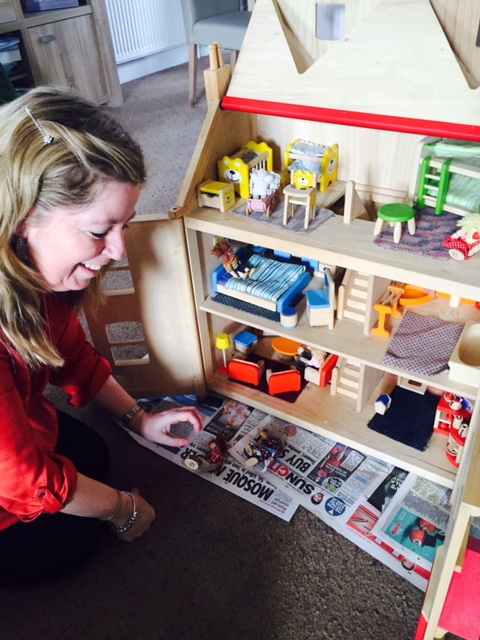
'Therapy for Life' have a gorgeous toy playhouse for the therapy room. In addition to our new Kinetic Sand Tray, toys, books, colouring pens and pencils.

Why is a model playhouse or a sand tray good for therapy?

Children don’t have the same cognitive ability as an adult to say what’s bothering them. The problem could be a behavioural issue, psychological issue, or maybe even medical. No matter what the problem is, they need a way to discuss it. The uses of play are very important, children can work on issues that are distressing to them, can play out issues of what they think the future will be, and can talk about trauma. If it’s too hard to put into words, they can work on it with play.

For example, many children under 12 years old can’t express what they’re feeling or really even be able to ask questions about what they’re feeling. They just know something is different and upsetting. Play therapy might be a way for them to express what they find troubling without using any verbal language. You can’t stick the child on a couch and ask them to start telling you what’s on their mind. Instead play therapy builds upon their normal communication level using play.

The range spans from a very non-directive child-centered play to a mixed approach and even a very direct approach such as cognitive behavioural play therapy. As children get older and become more verbal and able to think abstractly, they may be more able to use techniques common in cognitive behavioural therapy.

"Of course the most important aspect is enabling the child to feel safe, once they feel safe and relaxed, the playtime flows and the child can begin to tell their perspective on life through drawings and toy figures, recreating what they have experienced and what they predict might happen." Samantha Crook

The idea of being in control of the play can help give a child confidence. Since the child may feel out of control with the events playing out in the rest of his or her life, that sense of control during playtime is important.

It's even good for teaching parents how to use skills in play to help their children to open up.
Because of the way our society is today, a lot of parents are in the habit of turning play into an educational or learning experience, I see parents correcting their kids as they play, such as making them say ‘please’ or making them count items.

There’s this pressure on parents to use every opportunity to be a learning experience instead of just sitting and enjoying that playtime with the child. It can be hard to break that habit, but parents see how much kids value uninterrupted playtime at play therapy and we hope they’ll bring that experience home. For children to come to a place where they get to sit down and not only play but get 50 minutes of an adult’s complete attention is a rare thing.

If you think you're child is feeling lost and alone, or their behaviour is difficult or very quiet, please give us a call. We understand that all you want is your child to be happy, sometimes the help has to come from outside to bring the family together.


Wednesday, January 27, 2016

Parents who feel helpless... the best thing you could do for your child is this


Are you struggling to connect with your child?

Are emotions high, arguments constant, behaviour bad?

Do they seem quiet and shy or constantly getting into trouble?

If you are worried and they are not talking to you, you probably feel helpless.
The one certain way you can help your child is through counselling.

We at Therapy for Life have counsellors on board that have huge experience working with children from all backgrounds.

As a parent we feel our child’s pain, but thinking you are unable to help is incorrect. Let your child form a trusting bond with a therapist so they can release everything
that is bothering them.

“Sometimes kids don’t want to tell us parents all their ‘stuff’ for fear of hurting us or being disciplined.” 
Sam Director at Therapy for Life 

Take a massive step towards doing one of the best things you could ever do for your child. You know you’re a good parent when you never stop trying to help them.

“We don’t judge or criticise your parenting, we know how tough it is."

We are a big solution for a child that needs somewhere to talk and release their worries and pain.

You will notice how much better your child feels after the first session. Please call us, and you’ll be taking one of the most caring and beneficial actions for your child’s wellbeing.

Please contact Sam at Therapy for Life, you will be very welcomed by our friendly therapists, you will be seen quickly, and see how easy and laid back it all is for you.


Saturday, January 9, 2016

Impact of Mindfulness on our Health & Wellbeing

“As you read this, wiggle your toes. Feel the way they push against your shoes, and the weight of your feet on the floor. Congratulations, you’ve just done a few moments of mindfulness”
Says Tom Ireland writing for 'Scientific American'

Did you know Mindfulness originates from Buddhism?
We don’t have to be Buddhists to practice it though.

“You too could become enlightened!”

It’s been a useful therapy for anxiety and depression for around the last decade.


Schools, pro sports teams and military units are exploring it’s possibilities for enhanced performance, and is showing promise as a way of helping sufferers of chronic pain, addiction and tinnitus, too.

There is even some evidence that mindfulness can help with the symptoms of certain physical conditions, such as irritable bowel syndrome, cancer, and HIV.

“And all it involves is some quiet reflection each week and even better 10 minutes each day”. 


A University in North Carolina at Chapel Hill demonstrated a correlation between mindfulness practice in couples and an enhanced relationship.

“The couples reported improved closeness, acceptance of one another, autonomy, and general relationship satisfaction.” 
This ‘loving-kindness’ type meditation involves positive imagery and wishes towards another or yourself affecting how we relate to people.

One study tested participants by showing them pictures of strangers after carrying out this particular ‘loving-kindness’ meditation.

The participant’s thoughts and feelings were positively affected regarding the stranger’s pictures, which demonstrated how the meditation heightened their abilities to socially connect.

Also, parents of children with disabilities noticed increased positive parenting and improved relationship with their children. They also experienced less stress as a result of the mindfulness.
“In these studies, the children of these parents benefited from the mindful parenting practice, showing decreases in aggressive and non-compliant behaviour.”

If you or someone you know is interested in experiencing the benefits of mindfulness, or you are finding life difficult to cope with, please contact Therapy for Life
Sam or Jackie will be happy to help you.
Source:
Scientific American
Mindfulness Research